Finapp · 2023
The brief said one thing. The research said another. The research won.
A self-directed product design project originally created in 2023. The research changed the original brief, and the product has since evolved with me.
Role
Solo · Research → UIType
Self-directed mobileTools
Figma · Maze · FigJamStatus
Revisited in 2026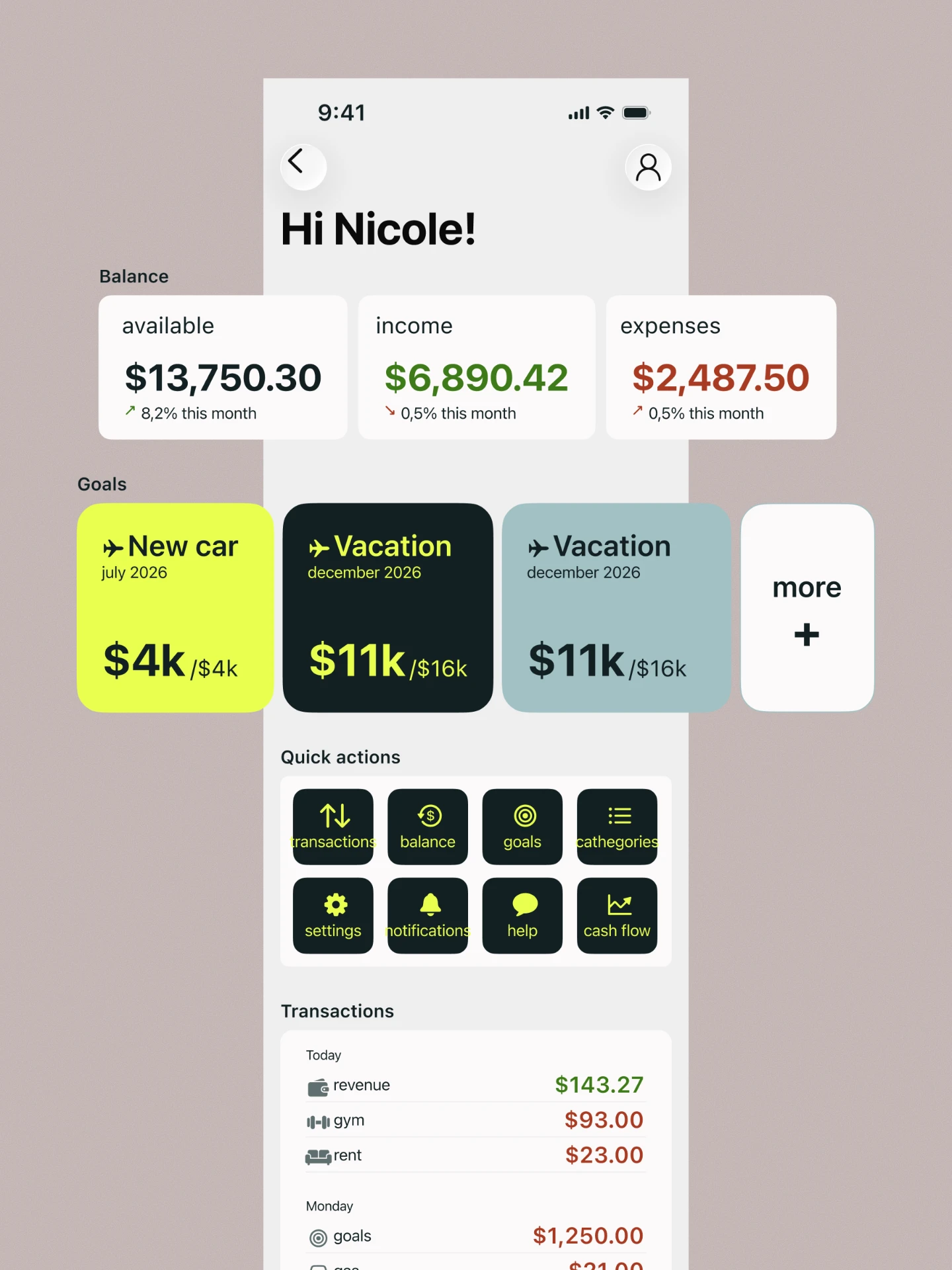
01 / Discovery
When the problem isn't the problem.
The project started with a clear brief: design an app to help people avoid missing payment deadlines, and in doing so, improve their credit score. Straightforward enough. Except the research didn't support it.
Early desk research and user interviews pointed somewhere unexpected. Missing deadlines wasn't the core issue. The real problem was upstream: people didn't have a clear picture of their finances. Not because they weren't paying attention, but because existing tools made it hard to see everything in one place, in a way that actually reflected how they lived and spent.
Pivoting the brief felt risky at first. But pushing forward with the original direction would have meant designing a solution to the wrong problem. The pivot held.
02 / Process
A process built around the questions.
Working alone meant making every methodological decision deliberately. The process gave the project structure, but the research kept deciding where it should go next.
01
Research
Desk research, competitor and indirect competitor analysis, user interviews, and affinity mapping.
02
Synthesis
User stories, personas, task analysis, user flows, and storyboard to pressure-test the direction.
03
Validation
Wireframes, hi-fi prototype, usability testing through Maze, and iteration based on the results.
User Flow
Wireframe
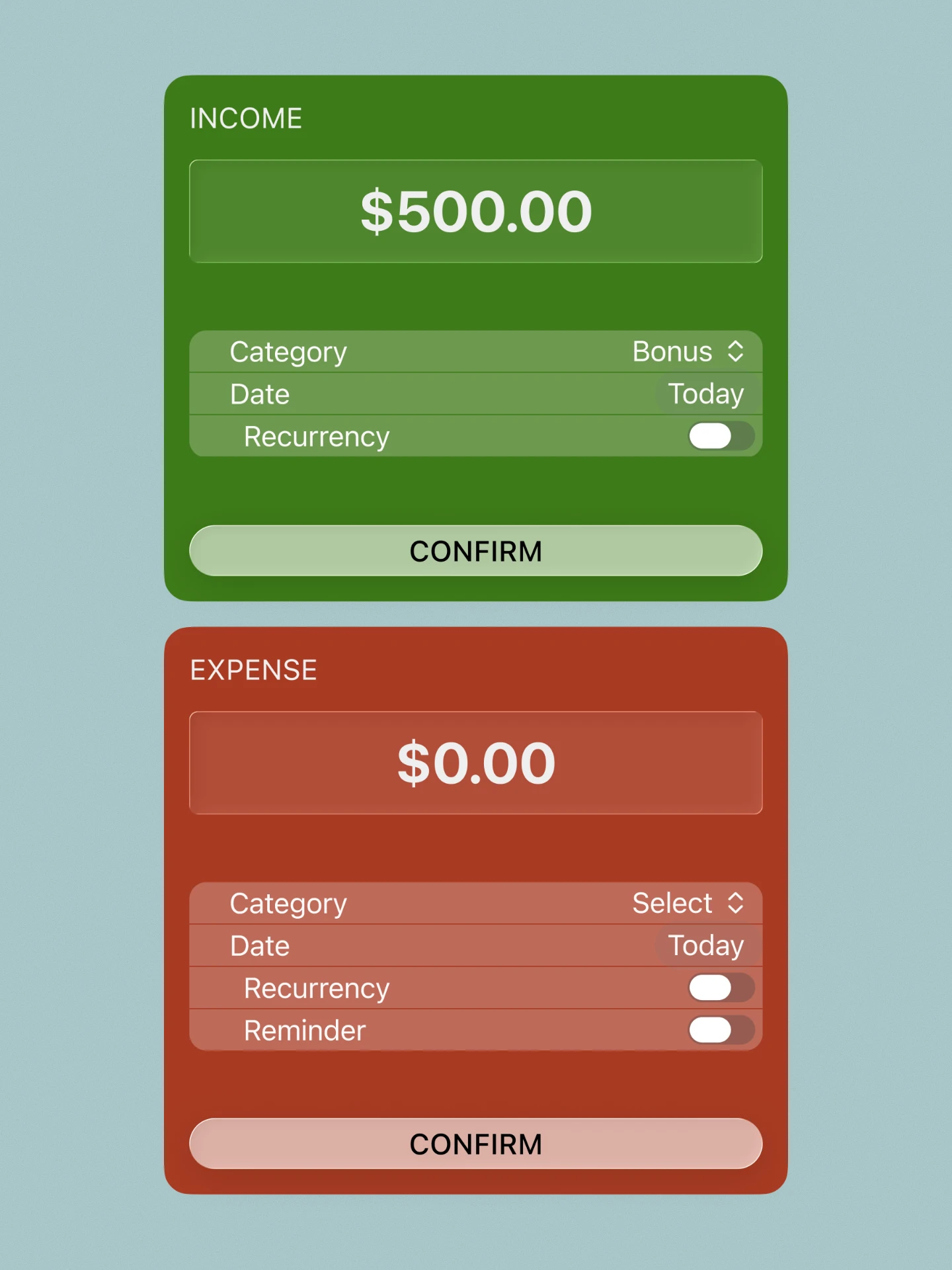
Goal: Understand whether the app's core function, adding income and expenses, feels simple and direct.
Scenario: Log into the app and add an expense.
Time: ideal 25s × worst 49s
Goal: Understand whether transaction search feels fluid.
Scenario: Check December transactions.
Time: ideal 8s × worst 214s
Goal: Understand whether the goal creation flow is sufficiently clear.
Scenario: Add a new financial goal.
Time: ideal 8s × worst 51s
03 / Product
The product, today.
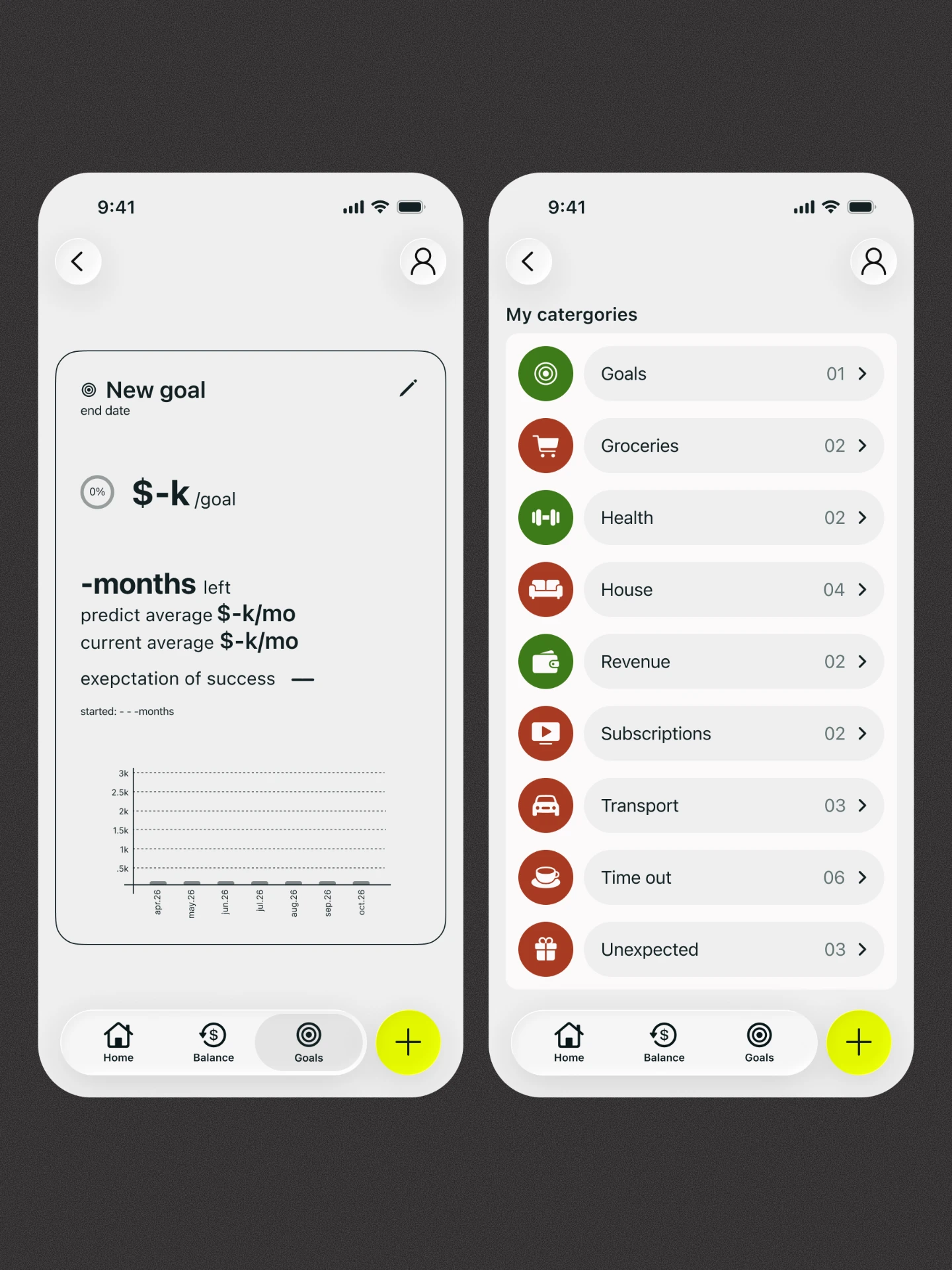
The original project focused on giving people a clearer view of their finances. The current interface keeps that direction, but brings the experience closer to the product patterns I would choose today.
04 / A second look
Coming back to the project changed the lens.
I originally designed Finapp in 2023, at a point when I was still learning how to translate UX thinking into a complete product interface. Coming back to it later, I realised the product was still interesting to me, but the interface no longer reflected how I would approach it today.
The original version had a strong visual identity, but some interactions were more custom than they needed to be. I wanted clearer hierarchy, more familiar patterns, and fewer elements competing for attention.
Rather than starting over, I kept the product direction and gave the interface another pass.
Before
Now
05 / What changed
Less custom. More intentional.
The redesign wasn't about making the interface more polished for the sake of it. It was about making choices that felt more familiar, more predictable, and easier to understand.
01
Familiar patterns
I looked more closely at established mobile patterns, including Apple's approach to hierarchy, navigation, and interaction, and adapted what made sense for Finapp.
02
Fewer destinations
The main navigation became more focused, while secondary actions moved closer to the moment when they are needed.
03
Clearer hierarchy
Visual personality stayed, but it stopped carrying the whole experience. The interface now has more room for content, context, and the actions that matter.
06 / Files
FigJam Research Board
The full research workspace, including affinity maps, interview notes, and synthesis from the solo research phase.
Finapp Prototype
The interactive prototype from the original project, including the flows, screens, and interactions explored after research and validation.
07 / Looking back
The product stayed. My way of looking at it changed.
The original project gave me a way to practice the full product design process, from understanding the problem to testing the solution. Coming back to it later gave me something different: the chance to question decisions I had once considered finished.
The redesign is small by comparison. That's partly the point. A stronger product isn't always the one with more screens or more visual detail. Sometimes it is the one that knows what doesn't need to be there.
Next project · 04
Social Impact — Landing Page